
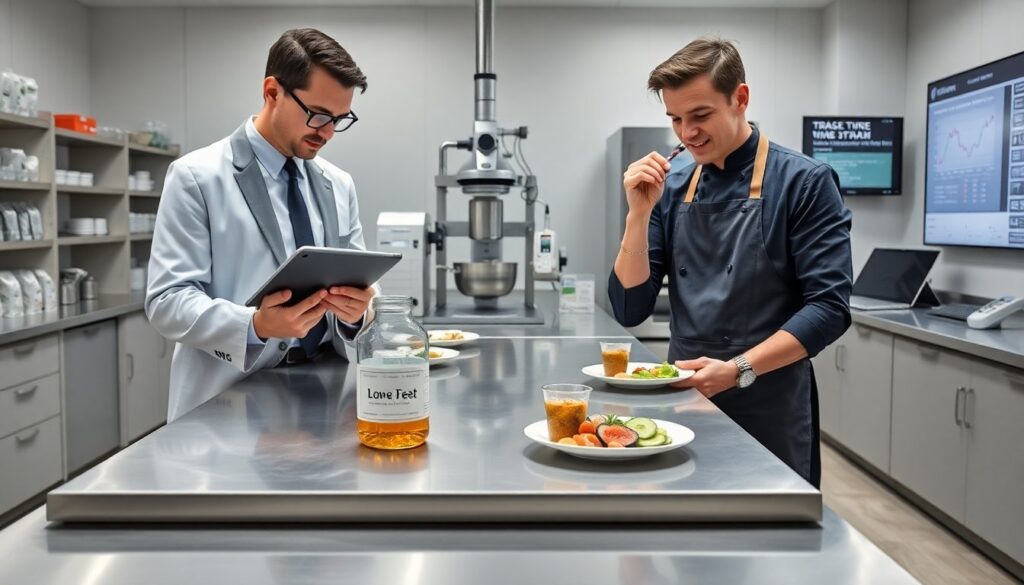
goh875-gfw53x food unique flavors businesstech-money appears as a focused product in 2026. It blends new taste notes and ingredient science. It targets small markets and niche consumers. It drives interest from chefs, startups, and investors. The introduction explains the product, the flavor value, and why companies track it now.
Key Takeaways
- Goh875-gfw53x food unique flavors businesstech-money is an engineered ingredient with a layered savory profile that enhances dishes and shortens recipe development time.
- Its stable formulation performs well under heat and storage, ensuring consistent quality across sauces, snacks, and ready meals.
- Advanced technology like sensor arrays and machine learning refines the flavor profile and improves quality control through real-time monitoring.
- The product is marketed in raw ingredient, co-branded, and white-label formats, targeting distinct buyers from manufacturers to premium brands.
- Marketing emphasizes measurable benefits, including reduced waste and faster development, helping procurement teams justify investment.
- Investors value the product’s reproducible metrics and automated controls, which lower operational risks and support scalable business growth.
What Goh875-Gfw53x Is And Why Its Flavor Profile Matters
Goh875-gfw53x food unique flavors businesstech-money refers to a single engineered ingredient line and its branded applications. It combines a base savory compound with three signature aromatic layers. Chefs use it to add contrast in a dish. Food labs use it to test mouthfeel and aroma retention.
Developers designed the compound to perform under heat and storage. They tested it across sauces, snacks, and ready meals. Test panels rated the compound for balance, aftertaste, and repeatability. Product teams recorded consistent results across batches.
The flavor profile matters for several reasons. First, it reduces recipe development time. Cooks can reach a target note with a single measured addition. Second, it lowers waste in pilot kitchens because fewer trial batches are needed. Third, it opens tasting windows for consumers who prefer bold, layered notes.
Retail buyers view goh875-gfw53x food unique flavors businesstech-money as a predictable asset. They can forecast shelf life and reorder points with fewer surprises. Foodservice operators see faster training for staff because the compound gives reliable outcomes.
Independent reviewers compared dishes with and without the compound. They found clearer savory peaks and a cleaner finish with the compound. Chefs then described it as a practical tool rather than a gimmick. That view helped the product cross from lab trials into real kitchens.
How Technology Shapes Product Development, Scaling, And Quality Control
Teams apply sensor arrays and machine learning to refine goh875-gfw53x food unique flavors businesstech-money. They collect volatile compound data and correlate it with human ratings. Models then suggest formulation changes. Engineers run experiments and update recipes in days instead of months.
Production uses continuous mixers and real-time spectrometers. Plants monitor aroma markers and adjust flow rates. This approach keeps batches within defined thresholds. Operators flag deviations and trigger corrective steps automatically.
Quality control teams apply digital records to every batch. They attach sensor logs, operator notes, and tasting scores. This log creates traceability and speeds up recalls if needed. It also helps buyers verify claims about consistency and safety.
Scaling follows a stepwise path. Developers move from lab samples to pilot lines. They then validate on full-scale equipment. Each step uses the same sensor protocols to align results. This method reduces scale-up risk and saves capital.
Tech also helps with sensory training. Teams use virtual tasting libraries that show compound markers and typical sensory outcomes. Staff then learn to identify off-notes faster. That training shortens onboarding for new plants and kitchens.
Investors note the tech stack around goh875-gfw53x food unique flavors businesstech-money. They value reproducible metrics and automated controls. Those features lower operational risk and increase the product’s growth potential.
Business Models, Monetization Strategies, And Market Opportunities
Companies package goh875-gfw53x food unique flavors businesstech-money in three commercial formats. They sell as raw ingredient, co-branded solution, and white-label supply. Each format targets a different price point and buyer profile.
Raw ingredient buyers include ingredient distributors and specialty food manufacturers. They buy in bulk and adjust formulations. Co-branded solutions target restaurant chains and premium food brands. Partners use the compound under a shared label and pay licensing fees. White-label supply serves meal kits and private-label snack makers. Those buyers seek cost predictability and consistent supply.
Pricing blends unit cost, licensing, and support. Sellers price the raw ingredient by kilogram. They add premium margins for co-branded and white-label offerings. Sellers also charge for technical support and rapid reformulation services. These services create recurring revenue and strengthen client ties.
Market opportunities appear in three channels. First, foodservice chains can shorten menu development and lower labor. Second, packaged-goods firms can launch new SKUs faster. Third, online meal-kit companies can improve perceived value with consistent flavor.
Marketing focuses on measurable outcomes. Sales teams share shelf-life data, sensory scores, and case studies. They show how goh875-gfw53x food unique flavors businesstech-money cut development time and reduced waste. That proof helps procurement teams justify purchases.
Investors assess margins and repeat business. They look for contract lengths, minimum order quantities, and technical service agreements. Companies that secure multi-year contracts and provide regular updates to formulations attract higher valuations.
Distribution mixes direct sales with partner networks. Sellers use regional co-packers to lower logistics costs. They also license the formula to strategic partners in new markets. This hybrid approach speeds market entry and preserves margin.